

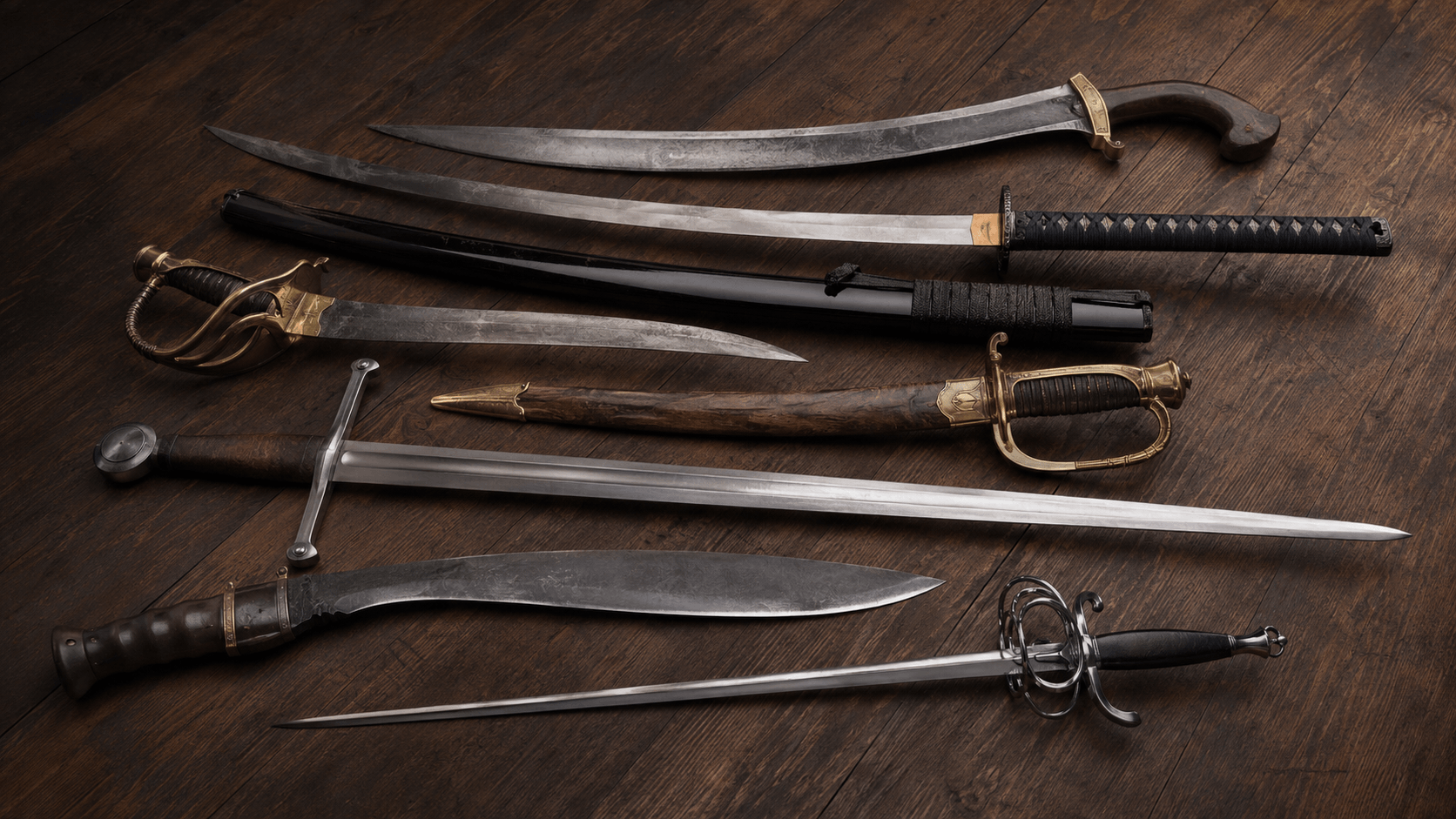
Types of swords have shaped warfare, culture, and craftsmanship for thousands of years. In this guide, we’ll explore 30 of the most important sword types throughout history, from European longswords to Japanese katanas. They served as symbols of power, tools of war, ceremonial objects, and masterpieces of craftsmanship. Although many people imagine a sword as a simple blade with a handle, history tells a very different story. Across continents and centuries, countless sword designs emerged, each developed to meet the unique needs of different warriors, cultures, and battlefields.
From the disciplined Roman legions wielding short gladius swords to Japanese samurai carrying elegant katanas, every sword type reflects the military tactics and technological advancements of its era. Some swords were designed primarily for cutting, while others excelled at thrusting attacks. Certain blades were created for mounted warriors, while others dominated infantry combat.
Today, swords continue to fascinate collectors, historians, martial artists, and fantasy enthusiasts. Whether you’re interested in medieval European weapons, legendary Japanese blades, or famous swords from movies and video games, understanding the different types of swords provides valuable insight into both history and craftsmanship.
In this guide, we’ll explore the most important sword types ever created, explain how they differ from one another, and examine the unique characteristics that made each blade effective in combat.
How Swords Are Classified
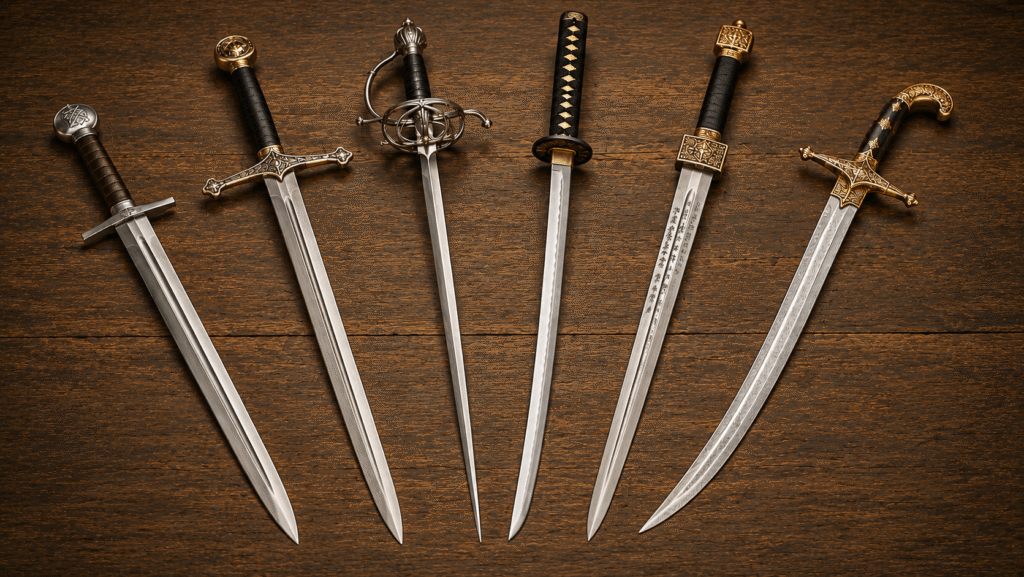
Before examining individual sword types, it’s important to understand how historians and collectors categorize swords. While there are hundreds of variations, most swords can be grouped according to blade shape, intended use, and geographic origin.
Straight vs. Curved Swords
One of the most obvious differences between sword types is the shape of the blade.
Straight swords are generally versatile weapons capable of both cutting and thrusting attacks. European longswords, Viking swords, and Roman gladii are classic examples of straight-bladed weapons.
Curved swords prioritize cutting efficiency. The curve naturally enhances slicing motions, making these blades highly effective for cavalry and fast-moving combat styles. Katanas, sabers, shamshirs, and scimitars are well-known examples of curved swords.
Neither design is universally superior. Each evolved to suit specific fighting techniques and battlefield requirements.
Single-Edged vs. Double-Edged Swords
Another major distinction involves the number of sharpened edges.
Single-edged swords feature one sharpened cutting edge and a thicker spine. This design often improves durability and cutting power. Katanas, falchions, and many Middle Eastern swords belong to this category.
Double-edged swords have sharpened edges on both sides of the blade. This allows greater flexibility during combat because attacks can be delivered from multiple angles without repositioning the weapon. Longswords, Viking swords, and rapiers commonly feature double-edged designs.
If you’d like to learn more about this topic, check out our guide on double-edged swords, where we explore their history, advantages, and famous examples in greater detail.
Cutting, Thrusting, and Hybrid Swords
Some swords excel at cutting, others at thrusting, and many attempt to balance both capabilities.
Cutting swords often feature broader blades and optimized edge geometry. Examples include the katana, saber, and falchion.
Thrusting swords generally possess narrower blades and sharp points designed to penetrate armor or exploit gaps in defenses. The rapier is perhaps the most famous thrust-oriented sword.
Hybrid swords combine cutting and thrusting capabilities. The medieval longsword is often considered one of the finest examples of a balanced sword design.
European Sword Types
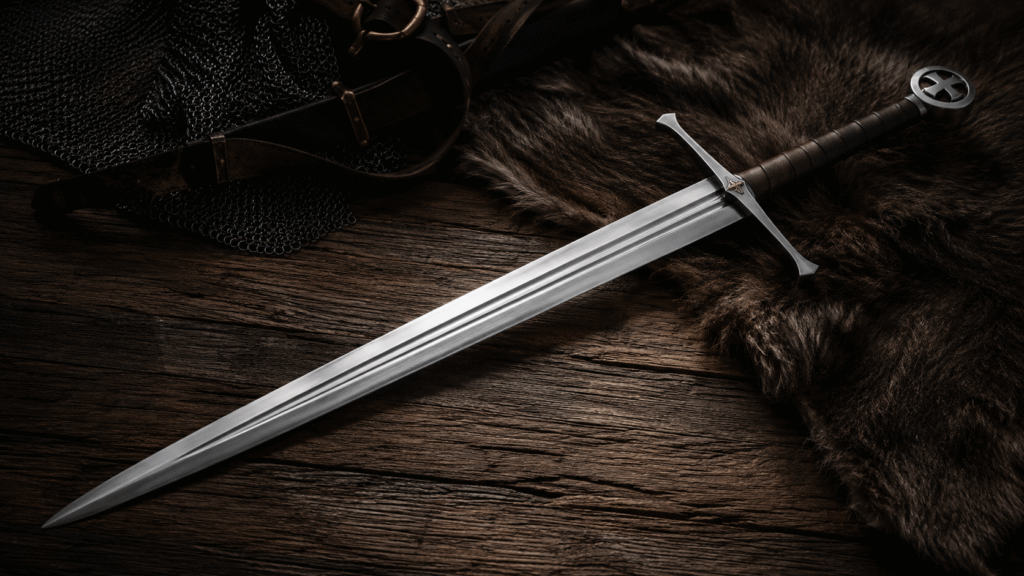
Europe produced some of the most recognizable swords in history. As warfare evolved from ancient Greece and Rome through the medieval period and Renaissance, sword designs changed dramatically to meet new challenges on the battlefield.
Viking Sword
The Viking sword was one of the most influential weapons of the Early Middle Ages. Used primarily between the 8th and 11th centuries, these swords were favored by Norse warriors throughout Scandinavia and beyond.
Most Viking swords featured broad double-edged blades measuring approximately 28 to 32 inches in length. Their design prioritized powerful cutting attacks, making them highly effective during shield-wall combat.
Today, Viking swords remain among the most sought-after historical replicas for collectors and enthusiasts.
Arming Sword
The arming sword became one of the defining weapons of medieval knights between the 11th and 15th centuries.
Often referred to as the “knightly sword,” the arming sword featured a straight double-edged blade and a cruciform crossguard. It was typically carried alongside a shield and served as a knight’s primary sidearm.
Most arming swords measured between 28 and 32 inches in blade length, offering an ideal balance between maneuverability and cutting power.
As armor technology improved, the limitations of the arming sword eventually encouraged the development of more specialized weapons, including the longsword.
Longsword
The longsword is often considered the ultimate medieval sword. Developed during the Late Middle Ages, it featured a longer grip that allowed warriors to use both hands for greater power and control.
Unlike many swords that specialized in either cutting or thrusting, the longsword excelled at both. Its versatility made it effective against a wide range of opponents and helped establish it as one of the most respected weapons in European history. Today, many historians regard the longsword as one of the most balanced sword designs ever created.
Claymore
The claymore is one of the most recognizable Scottish swords and a symbol of Highland warriors. Featuring a long double-edged blade and extended two-handed grip, it was designed for reach and powerful cutting attacks.
Used by Scottish clans between the 15th and 17th centuries, the claymore became closely associated with Highland warfare and remains one of the most popular historical swords among collectors and enthusiasts.
Zweihander
The Zweihander was one of the largest battlefield swords ever used in Europe. Developed in 16th-century Germany, these massive two-handed weapons were carried by elite Landsknecht soldiers.
Their extraordinary reach allowed warriors to disrupt enemy formations and engage opponents from a distance. Despite their size, Zweihanders served practical battlefield roles and remain among the most iconic weapons of the Renaissance.
Rapier
The rapier emerged during the Renaissance as civilian dueling became increasingly popular. Featuring a long, narrow blade and complex hand guard, it was designed primarily for fast and precise thrusting attacks.
Widely carried by nobles and gentlemen, the rapier played an important role in the development of European fencing and remains one of history’s most famous dueling swords.
Saber
The saber is a curved single-edged sword traditionally associated with cavalry warfare. Its shape allowed mounted warriors to deliver powerful slashing attacks while moving at high speed.
Popular throughout Europe from the 17th century onward, the saber became a favored weapon of cavalry officers and military leaders. Its effectiveness and elegant design ensured its popularity long after many other sword types disappeared from military service.
Falchion
The falchion was a medieval European sword known for its broad single-edged blade. Combining the cutting power of an axe with the versatility of a sword, it proved highly effective in combat.
Although often associated with common soldiers, historical examples show that falchions were used by warriors of various social classes. Their practical design and strong cutting ability made them popular battlefield weapons during the Middle Ages.
Gladius
The gladius was the primary sword of Roman legionaries and played a major role in the expansion of the Roman Empire. This short double-edged weapon was optimized for thrusting attacks and worked perfectly alongside the large Roman shield.
Its compact size allowed soldiers to fight efficiently in tight formations, helping make Roman armies some of the most successful military forces in history.
Xiphos
The xiphos was a short double-edged sword used by ancient Greek warriors. Although spears remained the primary weapon of Greek hoplites, the xiphos served as an important backup weapon during close combat.
Featuring a distinctive leaf-shaped blade, it offered a balance of cutting and thrusting ability. The xiphos accompanied Greek armies through some of the most famous battles of the ancient world and influenced later sword designs.
Japanese Sword Types
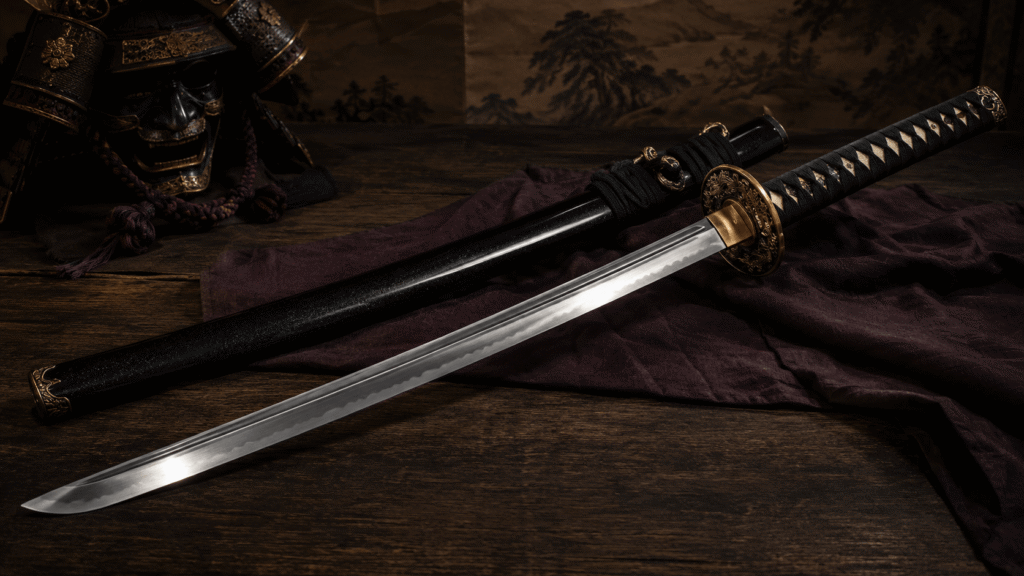
Few countries are as closely associated with swords as Japan. For centuries, Japanese swordsmiths developed some of the most refined blades in history, combining practical battlefield effectiveness with exceptional craftsmanship. These weapons became deeply connected to the culture of the samurai and continue to fascinate collectors around the world.
While many people use the word “katana” to describe all Japanese swords, Japan actually produced numerous blade types, each designed for specific purposes and periods of history.
Katana
The katana is the most famous Japanese sword and a symbol of the samurai. Featuring a curved single-edged blade and a long two-handed grip, it was designed for fast and effective cutting attacks.
Traditional Japanese swordsmiths used advanced forging techniques that produced blades known for their balance of hardness and flexibility. Carried by samurai throughout Japan’s feudal era, the katana became both a weapon and a symbol of status. Today, it remains one of the most recognizable sword types in the world.
Tachi
The tachi was a predecessor to the katana and was primarily used by mounted samurai. It featured a deeper curve and was traditionally worn with the cutting edge facing downward.
Designed for cavalry combat, the tachi excelled at powerful slashing attacks from horseback. Although it was eventually replaced by the katana, it played an important role in the evolution of Japanese sword design.
Wakizashi
The wakizashi was the traditional companion sword of the katana. Typically measuring between 12 and 24 inches, it formed part of the famous samurai daisho, a paired set of swords that symbolized status and rank.
Its shorter length made it practical for indoor use and close combat, while also serving as a reliable backup weapon. The wakizashi remains one of the most respected swords in Japanese history.
Tanto
The tanto is a Japanese dagger designed for close-quarters combat. Despite its compact size, it often featured the same high level of craftsmanship found in larger Japanese swords.
Favored by samurai and nobles, the tanto was valued for its practicality, elegance, and effectiveness in confined spaces. It remains an important part of Japan’s sword-making tradition.
Odachi
The odachi, also known as the nodachi, was a massive two-handed Japanese sword designed for battlefield use. Some examples exceeded three feet in blade length, giving warriors exceptional reach and cutting power.
Although difficult to carry and maneuver, the odachi earned a reputation as one of the most impressive weapons ever produced in Japan and remains a favorite among sword enthusiasts.
Chokuto
The chokuto was one of the earliest Japanese sword types. Unlike later Japanese swords, it featured a straight blade and was heavily influenced by Chinese and Korean weapon designs.
Used before the development of curved swords such as the tachi and katana, the chokuto represents an important stage in the evolution of Japanese swordmaking and military history.
Differences Between Japanese Sword Types
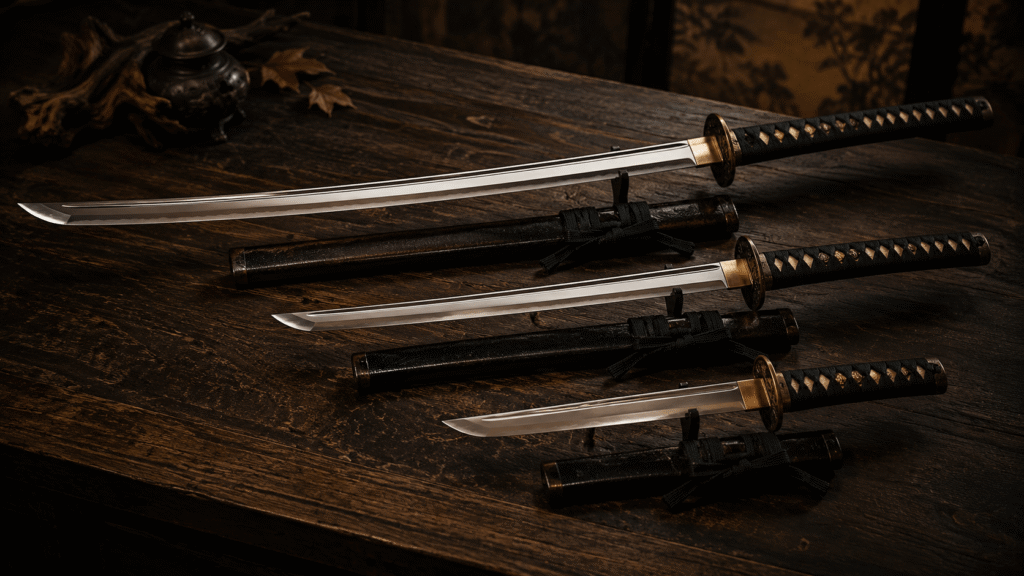
While all of these weapons belong to the broader family of Japanese swords, each was created for a specific purpose.
| Sword Type | Average Length | Primary Use |
|---|---|---|
| Katana | 24–30 inches | General combat |
| Tachi | 28–32 inches | Mounted warfare |
| Wakizashi | 12–24 inches | Backup weapon |
| Tanto | 6–12 inches | Close combat |
| Odachi | 36+ inches | Battlefield reach |
| Chokuto | Various | Early Japanese sword |
The diversity of Japanese sword designs demonstrates how weapons evolved to meet changing battlefield conditions and social requirements. From the compact tanto to the massive odachi, each blade reflects a unique chapter in Japan’s military history.
Chinese Sword Types
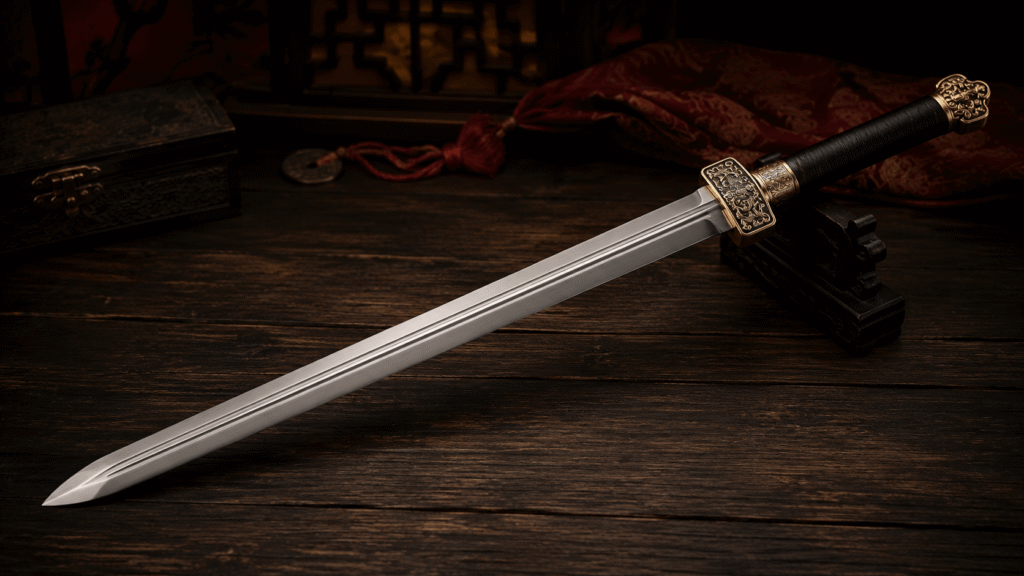
Although Japanese swords often receive more attention in popular culture, China possesses one of the oldest and most influential sword-making traditions in the world. Chinese blades influenced military development across East Asia for thousands of years and introduced several weapon designs that remain famous today.
Jian
Often called the “Gentleman of Weapons,” the jian is China’s most famous straight sword.
Featuring a double-edged blade, the jian emphasized precision, balance, and versatility. Unlike many battlefield swords that relied on brute force, the jian was often associated with skill, discipline, and refined martial arts techniques.
Chinese military officers, scholars, and martial artists frequently carried jian swords throughout history. Their elegant appearance and balanced handling earned them an enduring place in Chinese culture.
Dao
The dao is often considered China’s equivalent of the saber.
Unlike the straight jian, the dao typically features a curved single-edged blade optimized for powerful cutting attacks. Its practical design made it highly effective in military service, leading many historians to refer to it as China’s most important battlefield sword.
Numerous variations of the dao emerged over the centuries, each adapted to different combat roles and military requirements.
Middle Eastern Sword Types
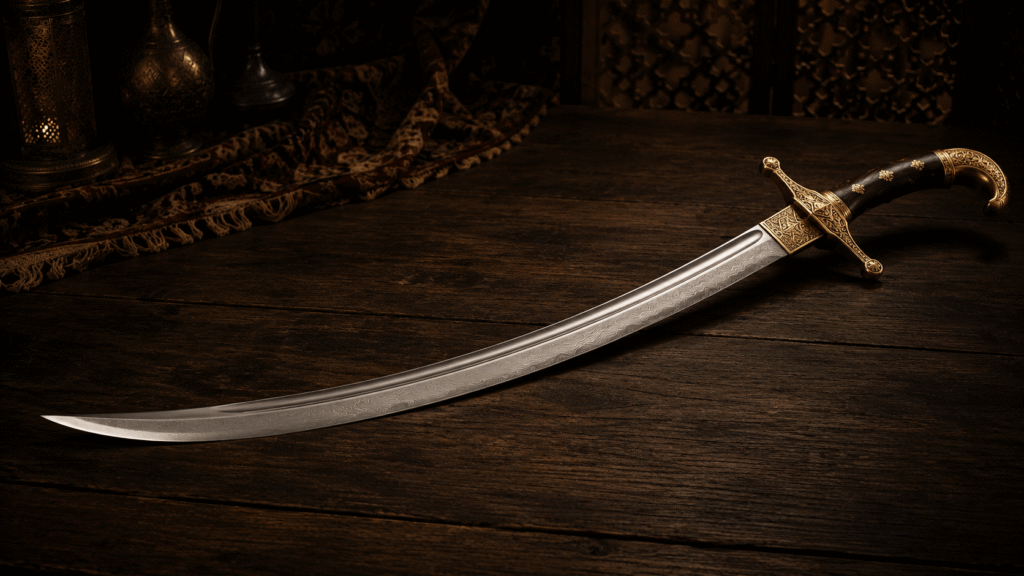
The Middle East produced some of the most elegant and effective swords in history. Designed for fast-moving combat and often associated with cavalry warfare, these weapons became famous for their distinctive curved blades and exceptional cutting ability.
Many Middle Eastern sword designs influenced military traditions far beyond their regions of origin, inspiring weapons used throughout Europe, Asia, and North Africa.
Shamshir
The shamshir is a Persian curved sword known for its elegant design and exceptional cutting ability. Its deeply curved blade was optimized for powerful slicing attacks, particularly from horseback.
Used throughout the Islamic world for centuries, the shamshir influenced many later sword designs and remains one of the most recognizable Middle Eastern weapons.
Kilij
The kilij was the signature sword of the Ottoman Empire and a highly effective cavalry weapon. Similar to the shamshir, it featured a curved blade with a widened tip known as a yelman, which increased cutting power.
Its combination of speed, reach, and striking force made the kilij one of the most respected swords of its era.
Scimitar
The term scimitar is commonly used to describe several types of curved Middle Eastern swords. Known for their elegant shape and strong cutting performance, scimitars became closely associated with warriors from the Middle East and North Africa.
Today, the scimitar remains one of the most recognizable sword designs in history and is frequently featured in movies, fantasy art, and video games.
Saif
The saif is a traditional Arab sword with a history spanning many centuries. Early versions were relatively straight, while later designs adopted the curved blades commonly associated with cavalry warfare.
Used throughout the Islamic world, the saif became an important military weapon and remains a symbol of Arab heritage and craftsmanship.
Most Famous Swords in Popular Culture
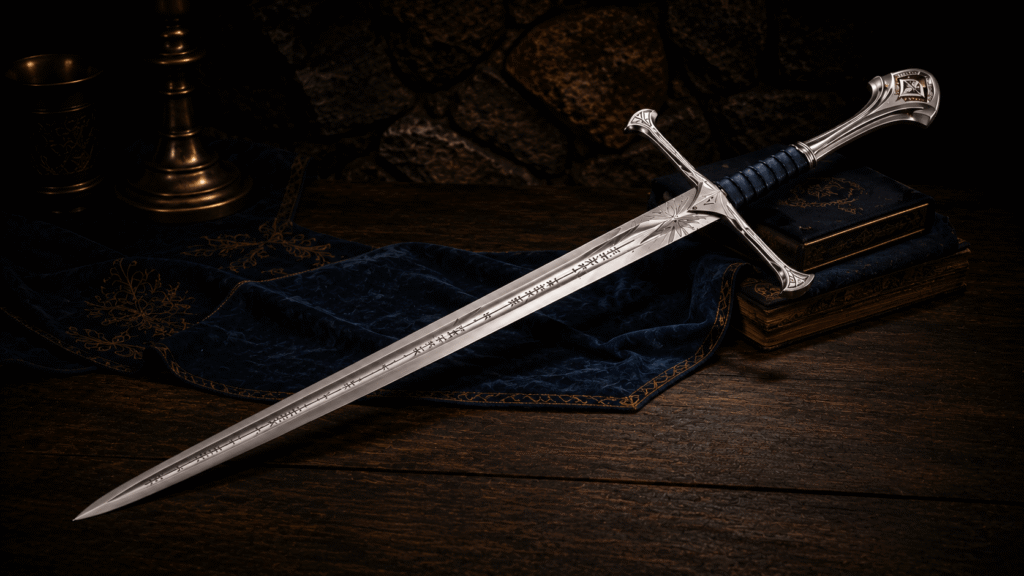
While historical swords continue to fascinate enthusiasts, some of the world’s most recognizable blades actually come from mythology, literature, films, and video games.
These legendary weapons have introduced millions of people to sword collecting and remain incredibly popular among fans.
Excalibur
No list of famous swords would be complete without Excalibur.
Associated with King Arthur and Arthurian legend, Excalibur is perhaps the most famous mythical sword ever created. Depending on the version of the story, the sword was either pulled from a stone or gifted to Arthur by the Lady of the Lake.
Excalibur has appeared in countless books, films, television series, and video games, making it one of the most enduring symbols of heroism and kingship.
Anduril
Known as the Flame of the West, Anduril appears in The Lord of the Rings and is wielded by Aragorn.
The sword was reforged from the shards of Narsil and became one of the most iconic fantasy weapons ever created. Its elegant design and powerful symbolism have made it a favorite among collectors of fantasy sword replicas.
Glamdring
Glamdring, often called the Foe-Hammer, was the legendary sword carried by Gandalf.
Appearing in both The Hobbit and The Lord of the Rings, Glamdring features distinctive Elvish styling that has inspired numerous replica versions.
Its combination of elegance, history, and association with one of fantasy’s most beloved characters has made it one of the most recognizable fictional swords in the world.
Frostmourne
Few video game weapons have achieved the legendary status of Frostmourne.
Featured prominently in World of Warcraft, Frostmourne was wielded by Arthas Menethil after his transformation into the Lich King.
The sword’s imposing design, runic engravings, and central role in Warcraft lore have made it one of the most sought-after fantasy sword replicas ever produced.
Master Sword
The Master Sword serves as the signature weapon of Link throughout The Legend of Zelda series.
Often described as the Blade of Evil’s Bane, it has appeared in numerous games spanning several decades.
Its instantly recognizable blue hilt and heroic symbolism have helped make it one of gaming’s most iconic weapons.
Sword Types Comparison Table
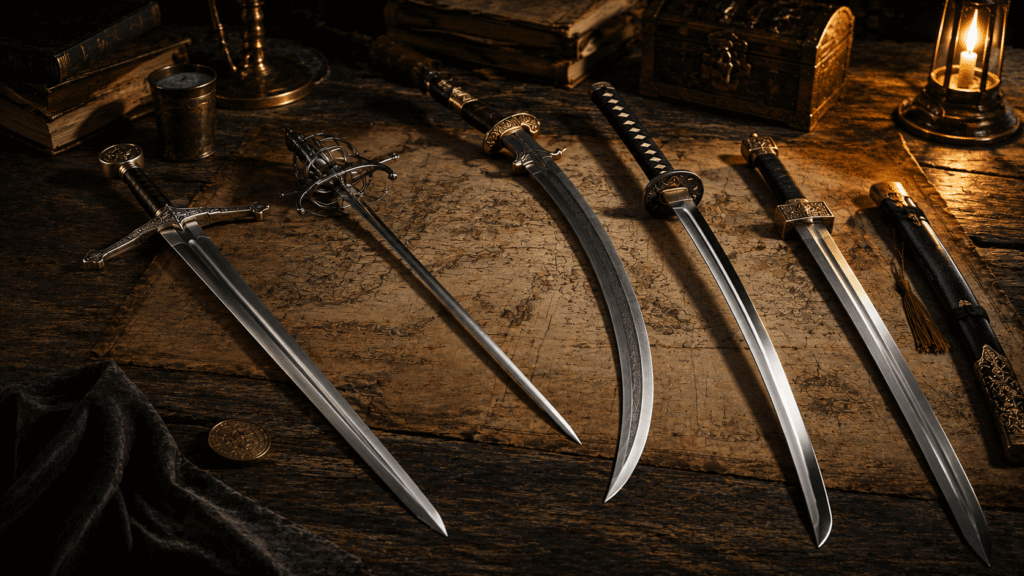
The following table provides a quick overview of some of the most famous sword types discussed in this guide.
| Sword Type | Origin | Blade Style | Primary Strength |
|---|---|---|---|
| Viking Sword | Scandinavia | Straight, double-edged | Powerful cutting |
| Arming Sword | Europe | Straight, double-edged | Versatility |
| Longsword | Europe | Straight, double-edged | Cut and thrust |
| Claymore | Scotland | Straight, double-edged | Reach and power |
| Zweihander | Germany | Straight, double-edged | Battlefield control |
| Rapier | Europe | Straight, narrow blade | Precision thrusting |
| Saber | Europe | Curved, single-edged | Cavalry combat |
| Katana | Japan | Curved, single-edged | Cutting ability |
| Tachi | Japan | Curved, single-edged | Mounted warfare |
| Jian | China | Straight, double-edged | Balance and agility |
| Dao | China | Curved, single-edged | Battlefield cutting |
| Shamshir | Persia | Deeply curved | Slicing attacks |
| Kilij | Ottoman Empire | Curved with yelman | Powerful cuts |
| Gladius | Rome | Straight, double-edged | Close combat |
Which Type of Sword Is Best?
This is one of the most common questions asked by sword enthusiasts, but there is no single correct answer.
The best sword depends entirely on its intended purpose.
If versatility is your priority, the longsword is often considered one of the most balanced designs ever created. Its ability to both cut and thrust made it effective in a wide range of situations.
For pure cutting performance, many enthusiasts point to the katana, shamshir, or saber. These weapons were specifically optimized for slicing attacks and remain highly respected for their efficiency.
If thrusting ability is most important, the rapier stands out as one of history’s finest dueling swords.
Those seeking maximum battlefield reach might favor weapons such as the claymore or Zweihander.
Ultimately, every sword discussed in this guide was designed to solve specific combat challenges. Rather than searching for a universally superior sword, it is more useful to understand the strengths and limitations of each design.
FAQ
What are the main types of swords?
The main sword categories include straight swords, curved swords, single-edged swords, and double-edged swords. Popular examples include the longsword, katana, rapier, saber, Viking sword, claymore, and gladius.
What is the most famous sword in history?
Historically, the Roman gladius and medieval longsword are among the most influential swords ever used. In mythology and popular culture, Excalibur is arguably the most famous sword of all time.
Is a katana better than a longsword?
Neither sword is objectively better. The katana specializes in cutting performance, while the longsword offers excellent versatility through its ability to both cut and thrust effectively.
What sword did Vikings use?
Vikings primarily used Viking swords featuring broad double-edged blades designed for one-handed use alongside a shield. Wealthier warriors often carried highly decorated examples.
Why are some swords curved?
Curved blades improve slicing efficiency and are particularly effective for mounted combat. This is why many cavalry swords, including sabers, shamshirs, and kilijs, feature curved designs.
What is the difference between a rapier and a saber?
A rapier is a straight thrust-oriented sword designed primarily for dueling, while a saber is a curved cutting sword traditionally associated with cavalry warfare.