

Introduction
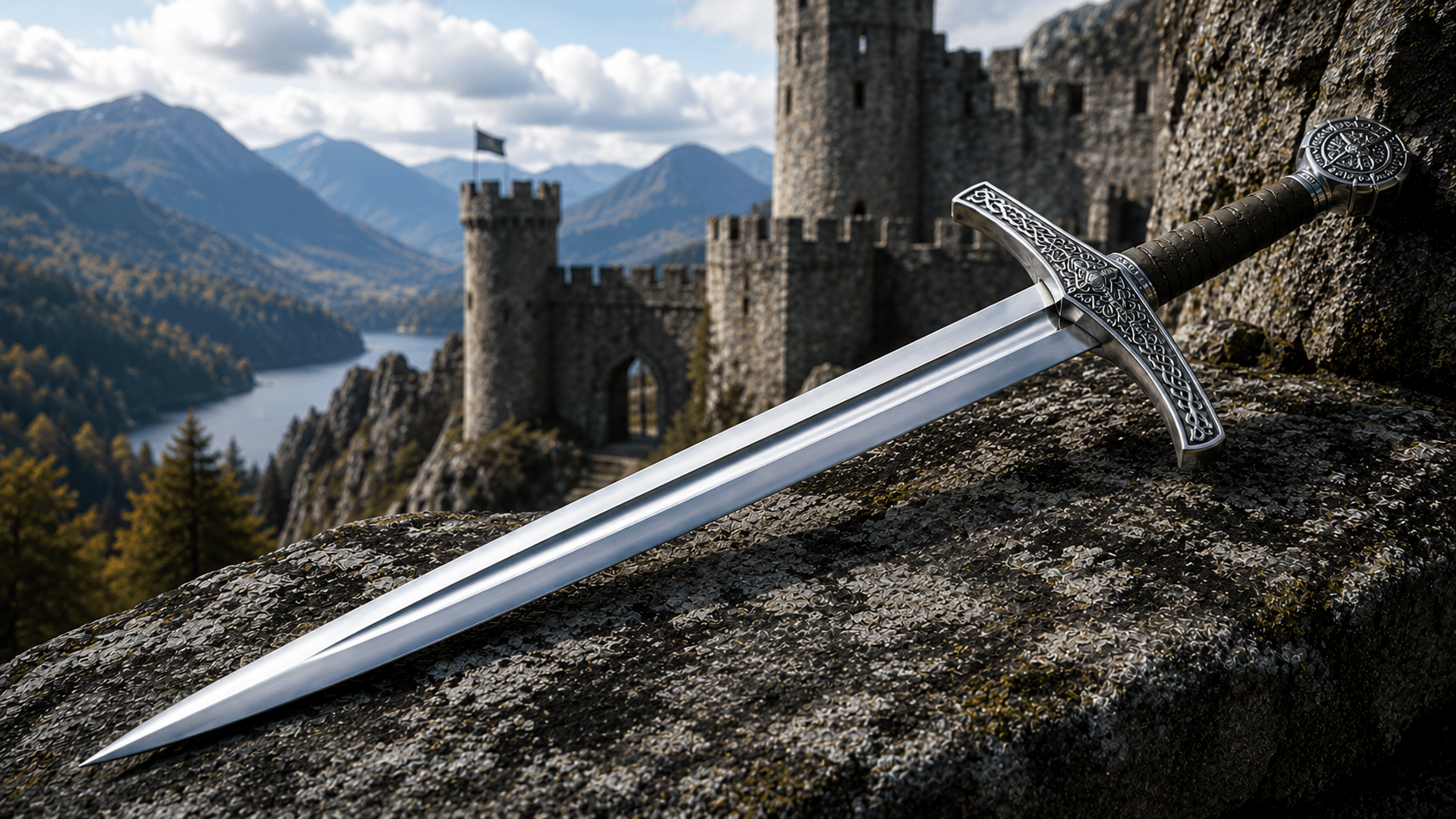
A double edged sword is a straight-bladed weapon with two cutting edges, making it effective for both cutting and thrusting. For more than two thousand years, these versatile weapons served on battlefields across Europe, from the disciplined legions of Ancient Rome to Viking raiders and medieval knights. Their balanced design allowed warriors to transition smoothly between powerful cuts, precise thrusts, and quick defensive maneuvers.
Today, their legacy extends far beyond history books. Double-edged blades remain popular among collectors, historical reenactors, martial arts practitioners, and fans of fantasy franchises. Iconic weapons such as Andúril from The Lord of the Rings, Frostmourne from World of Warcraft, and Longclaw from Game of Thrones all draw inspiration from real European sword designs.
But what made this blade style so successful? Why did civilizations continue to refine the same basic concept for centuries instead of replacing it with something entirely different?
In this guide, we’ll explore the history of the double-edged sword, its defining characteristics, advantages and disadvantages, famous historical and fictional examples, and what to consider when choosing a replica for your collection.
What Is a Double Edged Sword?
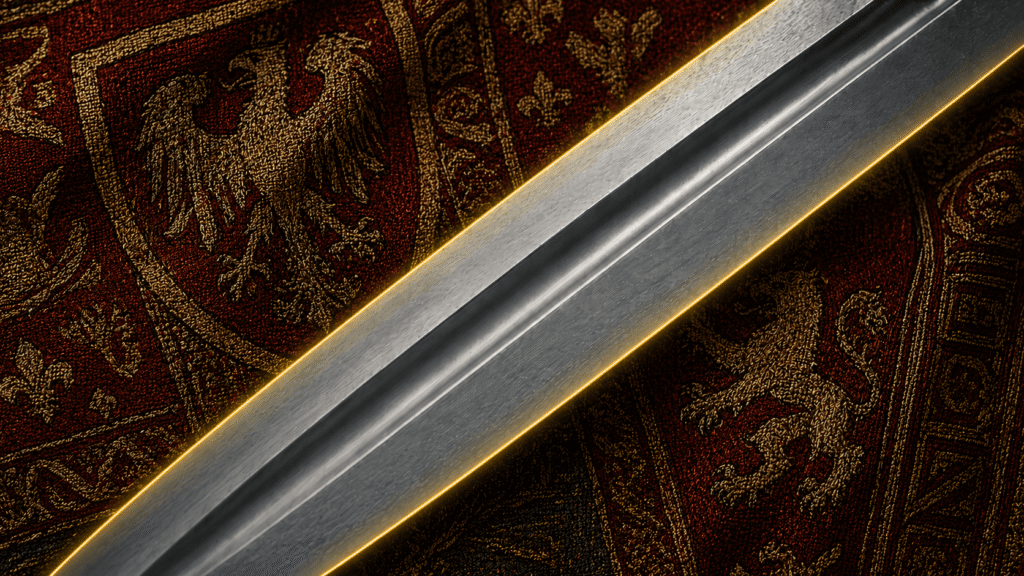
Although its design appears simple, the double edged sword is the result of centuries of refinement. A typical double edged sword combines a straight blade, symmetrical geometry, a pointed tip, and a balanced hilt, allowing it to perform effectively in both offensive and defensive combat.
Most historical examples also feature a sharply tapered point, making them highly effective for thrusting as well as cutting. This combination of offensive options is one of the main reasons the design remained dominant throughout much of European history.
Typical characteristics include:
- Two cutting edges
- Straight, symmetrical blade
- Pointed tip for effective thrusting
- Crossguard that protects the hand
- Pommel that balances the weapon
- Full tang construction for strength and durability
- Balanced weight distribution for responsive handling
A well-designed sword was never simply a sharpened piece of steel. Medieval swordsmiths carefully considered blade geometry, weight distribution, and balance to create weapons that felt quick in the hand while remaining powerful enough for battlefield use. Features such as the fuller, often mistakenly called a “blood groove”, helped reduce weight without significantly weakening the blade, while the pommel acted as a counterweight that improved control.
Throughout history, many of Europe’s most famous weapons shared this basic design. Roman legionaries relied on the Gladius, Viking warriors carried broad straight swords, and medieval knights fought with arming swords and longswords. Although these weapons differed in size, weight, and intended use, they all benefited from the same fundamental principle: a blade capable of both efficient cutting and accurate thrusting.
The term “double-edged sword” has also become a common metaphor for something that brings both benefits and drawbacks. While that figurative meaning is widely recognized today, the original weapon remains one of the most influential and enduring sword designs ever created.
The History of Double Edged Swords
The history of the double edged sword spans more than three millennia, evolving alongside advances in metallurgy, armor, and military tactics. While countless sword designs appeared throughout history, the straight, two-edged blade remained one of the most successful and enduring weapon types ever created.
Bronze Age Origins
The earliest swords emerged during the Bronze Age, around 1600 BC. Although these weapons were relatively short by later standards, they marked an important step beyond daggers and spears. Bronze allowed craftsmen to produce longer blades capable of both cutting and thrusting, giving warriors a versatile sidearm for close combat.
Many of these early weapons already featured two sharpened edges, a design that offered greater flexibility during battle than single-edged alternatives.
Ancient Greece
Greek hoplites relied primarily on spears, but once tightly packed formations broke apart, swords became essential. Weapons such as the Xiphos were designed for close-quarters fighting, combining a sharp point with balanced cutting ability.
Their compact size made them effective backup weapons whenever a spear was lost or broken during combat.
Ancient Rome
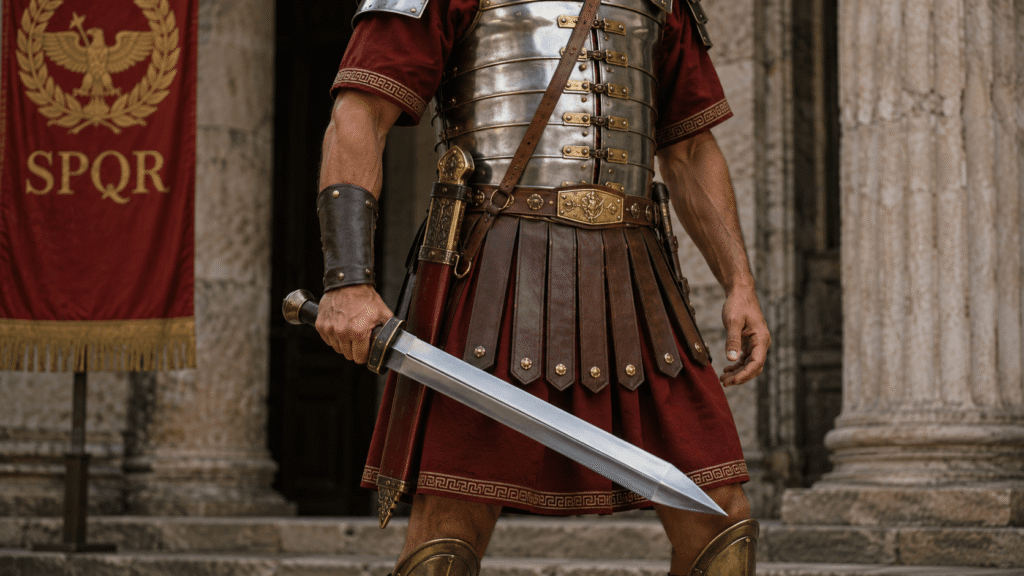
Few civilizations demonstrated the effectiveness of the double edged sword better than Ancient Rome. The famous Gladius became one of history’s most influential military weapons, helping Roman legions expand their empire across Europe, North Africa, and the Middle East.
Unlike the sweeping attacks often shown in modern films, Roman soldiers were trained to deliver short, controlled thrusts while remaining protected behind large shields. The Gladius proved devastating in disciplined formations, where precision mattered more than dramatic swings.
Its success influenced European sword development for centuries and established many principles that later swordsmiths continued to refine.
The Viking Age
During the Viking Age (roughly AD 800–1050), swords became valuable symbols of wealth, status, and personal achievement. A well-crafted blade required exceptional skill and expensive materials, making ownership a sign of prestige as much as military strength.
Viking swords typically featured broad blades, wide fullers, and carefully balanced construction that allowed fast, decisive strikes. Many surviving examples display intricate pattern welding, silver inlays, and richly decorated hilts, highlighting the remarkable craftsmanship of early medieval blacksmiths.
Although axes were more common among ordinary warriors, swords remained highly prized possessions that were often passed from one generation to the next.
Medieval Europe
The medieval period brought significant advances in sword design as armor became increasingly sophisticated. Mail armor gradually gave way to plate armor, requiring weapons capable of adapting to changing battlefield conditions.
The arming sword became the standard sidearm of European knights, offering an excellent balance between speed, reach, and versatility. As combat techniques evolved, longer grips and blades led to the development of the longsword, which could be wielded with one or two hands depending on the situation.
Historical fencing manuals written by masters such as Johannes Liechtenauer and Fiore dei Liberi reveal surprisingly advanced combat systems, demonstrating that medieval swordsmanship relied on timing, precision, and technique rather than brute strength alone.
Renaissance and Later Developments
By the sixteenth century, firearms were gradually replacing swords as primary battlefield weapons. Even so, swords remained important for self-defense, military service, dueling, and ceremonial purposes.
New weapons such as the rapier emphasized speed and precision over heavy cutting power, reflecting changing styles of civilian combat. Although their battlefield role declined, straight two-edged blades continued to symbolize authority, honor, and martial tradition throughout Europe.
Today, historical examples preserved in museums—and high-quality replicas produced by modern craftsmen, allow enthusiasts to appreciate the engineering, artistry, and cultural significance of these remarkable weapons.
Why Were Double Edged Swords So Popular?
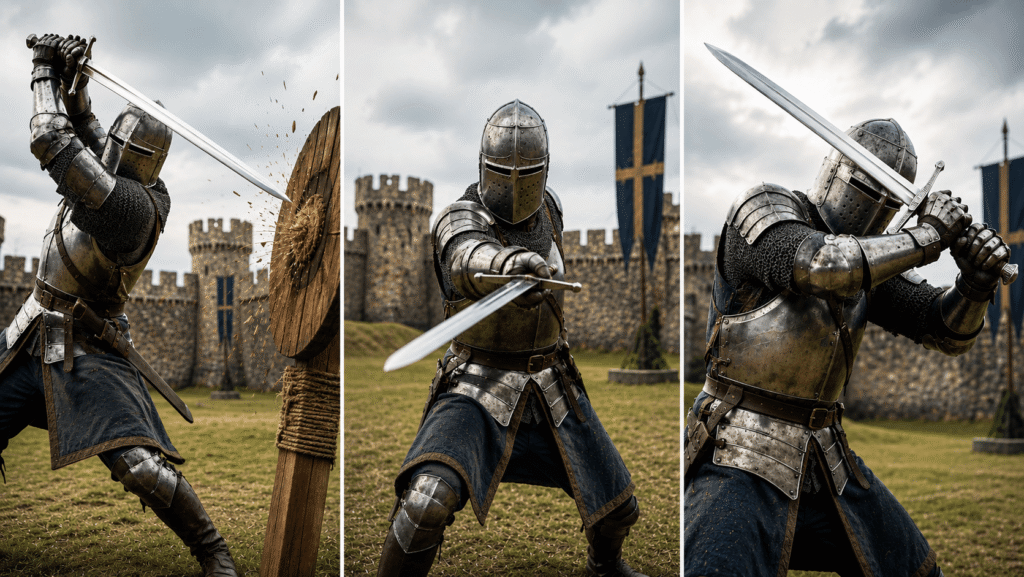
The long-lasting success of the double edged sword was no coincidence. For centuries, it offered an ideal balance of speed, versatility, and reliability, making it suitable for soldiers, professional warriors, and knights alike. Rather than excelling in only one area, these weapons performed well in a wide range of combat situations.
Versatility in Combat
One of the greatest strengths of a double edged blade is its ability to transition smoothly between different types of attacks. A swordsman could slash, thrust, parry, and counterattack without changing weapons or significantly adjusting their grip.
This flexibility proved invaluable in unpredictable battles, where fighting styles and opponents could change within seconds.
Faster Follow-Up Strikes
Because both edges are sharpened, the blade can deliver consecutive attacks with minimal wrist movement. After one cut, the opposite edge is immediately ready for the next strike, allowing experienced fighters to chain attacks together more efficiently.
Although training and technique always mattered more than the weapon itself, this design naturally supported faster combinations.
Excellent Thrusting Capability
Unlike many single-edged weapons that prioritize slicing, most European swords were built as cut-and-thrust weapons. Their symmetrical profile and tapered point made them highly effective for precise thrusts.
As armor became more advanced during the Middle Ages, this ability became increasingly important. Rather than attempting to cut through steel plate, skilled fighters targeted openings around the visor, armpits, elbows, or joints where protection was weaker.
Balanced Handling
A properly made sword is carefully balanced rather than simply heavy. Medieval swordsmiths designed blades so that weight was distributed efficiently between the hilt and the point, creating a weapon that felt responsive instead of cumbersome.
Contrary to popular belief, historical swords were surprisingly light. Most one-handed arming swords weighed between 1 and 1.5 kg (2.2–3.3 lbs), allowing warriors to fight for extended periods without the exaggerated fatigue often portrayed in movies.
Adaptable Across Different Eras
Another reason these blades remained popular is their remarkable adaptability. While individual designs evolved over the centuries, the underlying concept changed very little.
The Roman Gladius, Viking swords, knightly arming swords, and medieval longswords all shared the same basic principle: a straight, two-edged blade capable of delivering both powerful cuts and accurate thrusts. Improvements in steel production and heat treatment refined their performance, but the core design continued to prove effective generation after generation.
A Proven Design
History itself offers perhaps the strongest argument for this type of weapon. Very few military designs remain relevant for over a thousand years, yet straight double-edged blades served countless civilizations across Europe.
Their continued use was not driven by tradition alone. They survived because they worked, combining practicality, durability, and versatility in a way that few other weapons could match.
Double Edged Sword vs Single Edged Sword
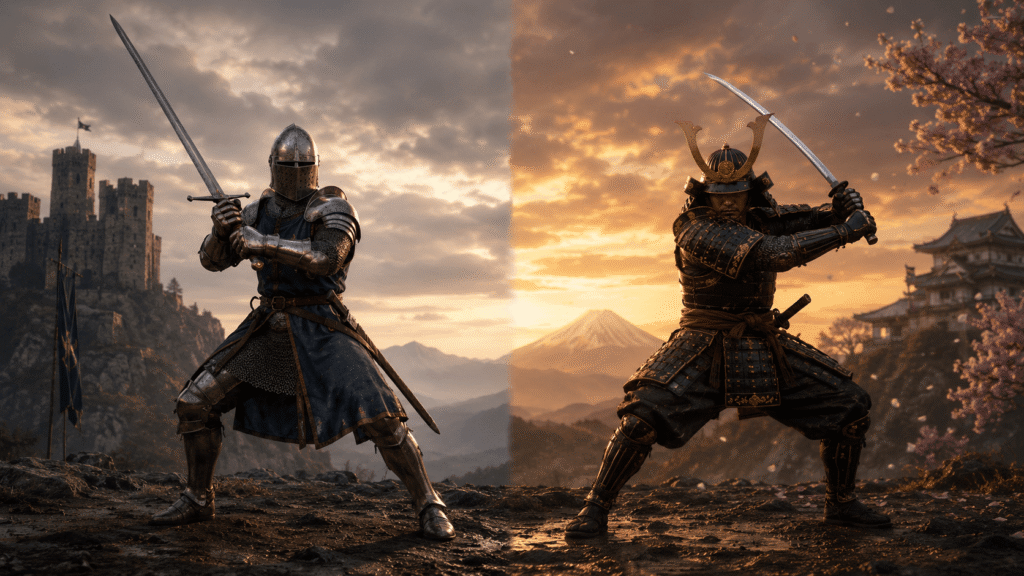
One of the most common discussions among sword enthusiasts is whether a double edged sword is superior to a single-edged blade. In reality, neither design is universally better. Each was developed to meet different tactical needs and cultural traditions.
| Feature | Double Edged Sword | Single Edged Sword |
|---|---|---|
| Cutting Performance | Excellent | Excellent |
| Thrusting Performance | Excellent | Good to Excellent |
| Versatility | Very High | Moderate |
| Edge Maintenance | Requires sharpening on both edges | Easier to maintain |
| Historical Use | Europe, Ancient Rome, Viking Age | Japan, China, Middle East |
| Fighting Style | Balanced cut-and-thrust | Primarily optimized for cutting |
Single-edged weapons such as the katana, dao, and falchion often feature blade geometry that emphasizes slicing efficiency. Their thicker spine also provides additional structural support while keeping only one cutting edge sharpened.
European swordsmiths, on the other hand, generally favored versatility. A two-edged blade could respond effectively to a wider variety of combat situations, making it suitable for battlefield engagements, personal defense, and armored fighting.
Rather than asking which design is objectively better, it’s more accurate to ask which one was better suited to a particular style of warfare. Both approaches proved highly successful and remained in use for centuries because they excelled within their own military traditions.than asking which is better, it is often more useful to ask which was better suited to a particular style of warfare.
Famous Double Edged Swords
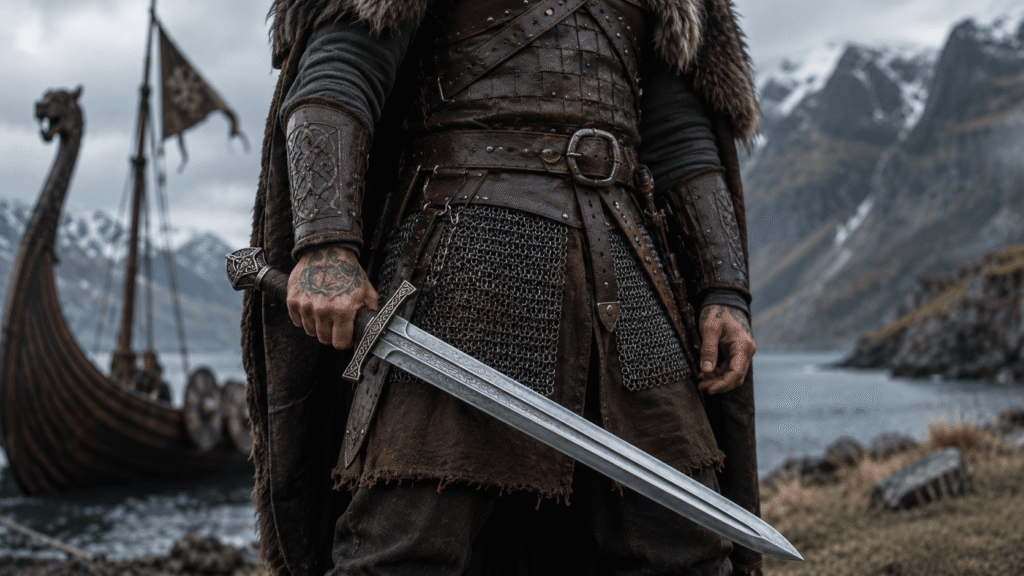
Throughout history, countless weapons have featured two sharpened edges, but only a handful have achieved legendary status. Some earned their reputation on the battlefield, while others became icons through literature, films, and video games. Together, they demonstrate the lasting influence of European sword design across both history and popular culture.
The Roman Gladius
Few weapons changed the course of history as dramatically as the Gladius. As the standard sidearm of Roman legionaries, it played a key role in the expansion of one of the greatest empires the world has ever seen.
Unlike the oversized swords often portrayed in movies, the Gladius measured only around 60 to 70 centimeters (24–28 inches). Its compact size made it ideal for disciplined formations, where soldiers fought shoulder to shoulder behind large shields. Designed primarily for powerful thrusts but fully capable of cutting, it proved devastating in close combat.
Its effectiveness influenced military weapon design for centuries and cemented its place among history’s greatest swords.
Viking Sword
The Viking sword has become one of the most recognizable medieval weapons ever created. Characterized by its broad blade, wide fuller, and simple yet functional hilt, it offered an excellent balance between cutting power and maneuverability.
To the Vikings, a sword represented far more than a weapon. It was a symbol of honor, wealth, and personal achievement. High-quality blades were expensive to produce and were often passed down through generations as treasured family heirlooms.
Today, Viking sword replicas remain among the most popular choices for collectors and historical reenactors.
Arming Sword
During much of the High Middle Ages, the arming sword served as the standard weapon of European knights. Typically carried alongside a shield, it was compact enough for one-handed use while remaining highly effective in battle.
Its balanced proportions made it suitable for nearly every aspect of medieval combat, including cutting, thrusting, and defensive techniques. As armor evolved, the arming sword gradually developed into longer and more specialized designs, eventually giving rise to the longsword.
Longsword
Often regarded as the pinnacle of medieval European swordmaking, the longsword combined reach, versatility, and sophisticated fighting techniques.
Its extended grip allowed the weapon to be used with either one or two hands, giving fighters greater control and adaptability. Historical fencing manuals from the 14th and 15th centuries describe complex systems of strikes, thrusts, grappling, and defensive maneuvers built around this weapon.
Far from being heavy or unwieldy, a well-balanced longsword was remarkably agile in trained hands.
Andúril
Known as the Flame of the West, Andúril is one of the most famous fantasy swords ever created. Forged from the broken shards of Narsil, it becomes the sword carried by Aragorn throughout The Lord of the Rings.
Although fictional, its appearance closely resembles historical European longswords, featuring a straight cruciform hilt, symmetrical blade, and elegant proportions inspired by medieval craftsmanship.
Its blend of historical realism and fantasy storytelling has made it one of the most recognizable replica swords in the world.
Frostmourne
Few fantasy weapons have achieved the same legendary status as Frostmourne, the cursed runeblade wielded by Arthas Menethil in World of Warcraft.
Its enormous blade, glowing runes, and intimidating silhouette make it instantly recognizable among gamers. While its exaggerated proportions reflect fantasy rather than historical accuracy, the overall design still draws inspiration from traditional European sword construction.
For many collectors, Frostmourne represents the perfect combination of fantasy art and medieval aesthetics.
Longclaw
Given to Jon Snow in Game of Thrones, Longclaw is another excellent example of how modern fantasy borrows from historical sword design.
Featuring a straight blade, simple crossguard, and distinctive wolf-head pommel, it resembles a traditional medieval longsword far more than the oversized fantasy weapons commonly seen in other franchises.
Its realistic proportions have made it one of the most sought-after replica swords among television and fantasy enthusiasts.
Whether preserved in museums or recreated by modern craftsmen, these famous swords continue to inspire historians, collectors, and fans around the world. Their enduring popularity demonstrates that the appeal of the double edged sword extends far beyond the battlefield, remaining deeply connected to history, craftsmanship, and storytelling.
Buying Guide: Choosing a Double Edged Sword Replica
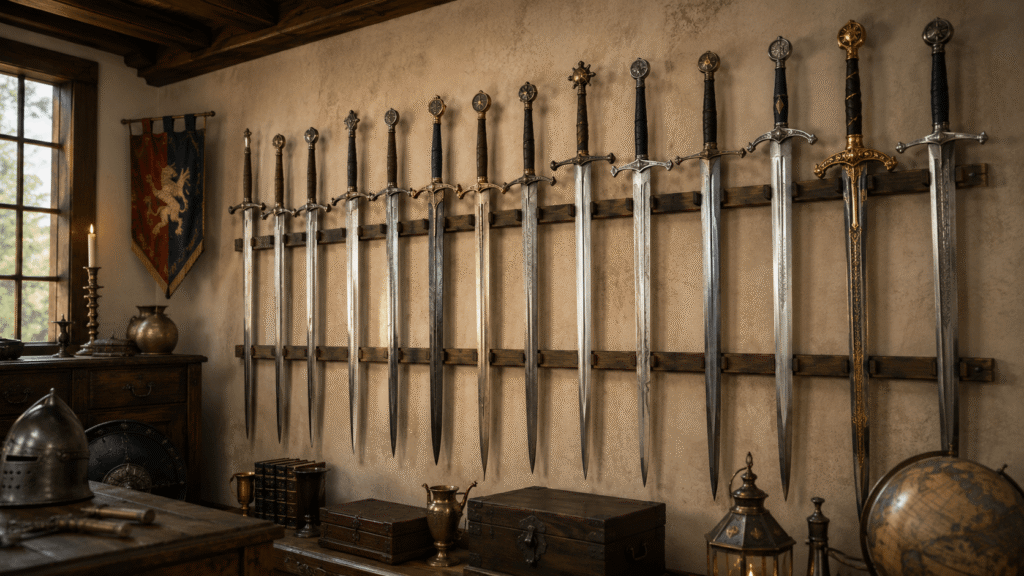
There are many types of swords. Whether you’re a history enthusiast, a fantasy fan, or a first-time collector, choosing the right sword depends on how you plan to use it. Some replicas are designed purely for display, while others are built with higher-quality materials for collectors who value historical authenticity.
Before making a purchase, consider the following factors.
Decorative vs. Functional
The first question to ask is whether you want a decorative display piece or a functional replica.
Decorative swords are primarily intended for display and often prioritize intricate details, screen accuracy, and ornate finishes. They’re ideal for home collections, offices, or themed rooms.
Functional replicas, on the other hand, are typically constructed from high-carbon steel with a full tang design. While many collectors appreciate their authenticity, they also require more care and maintenance than decorative stainless steel models.
Always check the product description to understand how a particular replica is intended to be used.
Blade Material
The blade material has a significant impact on appearance, durability, and maintenance.
High-carbon steel closely resembles the materials used in historical weapons. It offers excellent strength and authenticity but should be cleaned and lightly oiled to prevent corrosion.
Stainless steel is more resistant to rust and requires less maintenance, making it a popular choice for decorative swords displayed indoors.
Neither material is inherently better—it simply depends on your priorities as a collector.
Historical or Fantasy Design
One of the best parts of collecting swords is choosing pieces that reflect your personal interests.
Some collectors prefer historically inspired replicas such as Viking swords, Roman Gladii, arming swords, or medieval longswords. Others enjoy iconic fantasy weapons from films, television, and video games, including Andúril, Frostmourne, and Longclaw.
Many modern replicas successfully combine historical craftsmanship with fantasy-inspired artwork, offering the best of both worlds.
Craftsmanship and Details
Small details often separate an average replica from an exceptional one.
When comparing swords, pay attention to:
- Blade finish and polish
- Hilt construction
- Guard and pommel alignment
- Engravings and decorative details
- Grip material and wrapping quality
- Overall fit and finish
Well-crafted replicas not only look more authentic but also retain their appearance for many years when properly maintained.
Displaying Your Collection
A quality sword deserves an equally attractive display.
Many collectors use wall mounts, wooden plaques, vertical stands, or dedicated display racks to showcase their favorite pieces. Proper storage also helps protect the blade from unnecessary wear, moisture, and accidental damage.
If you’re planning to expand your collection over time, consider choosing a display solution that allows additional swords to be added later.
FAQ
What is a double edged sword?
A double edged sword is a sword with two sharpened cutting edges running along opposite sides of the blade. This design allows the wielder to cut and thrust effectively without needing to rotate the weapon between attacks.
Are Viking swords double edged?
Yes. Most Viking swords featured straight, double-edged blades with a broad profile and a pointed tip, making them effective for both cutting and thrusting.
What is the most famous double edged sword?
Historically, the Roman Gladius and the medieval longsword are among the best-known examples. In modern popular culture, Andúril, Frostmourne, and Longclaw are some of the most recognizable fantasy swords.
Are double edged swords better than single edged swords?
Not necessarily. Double-edged blades generally offer greater versatility, while many single-edged swords are optimized for powerful slicing attacks. The better choice depends on the historical context, intended use, and personal preference.
Were medieval swords double edged?
Many were. Arming swords, longswords, and numerous knightly sidearms featured two sharpened edges, although some specialized medieval weapons used single-edged blades.
What’s the difference between a longsword and a double edged sword?
A longsword is a specific type of double edged sword. While most longswords have two sharpened edges, not every double-edged sword is a longsword. The category also includes weapons such as the Gladius, arming sword, and many Viking swords.